



The Appeal of Shiba Daijingu's "Daradara Matsuri": Thoughts on Tradition Embodied in "Unchanging" and "Universal" Values
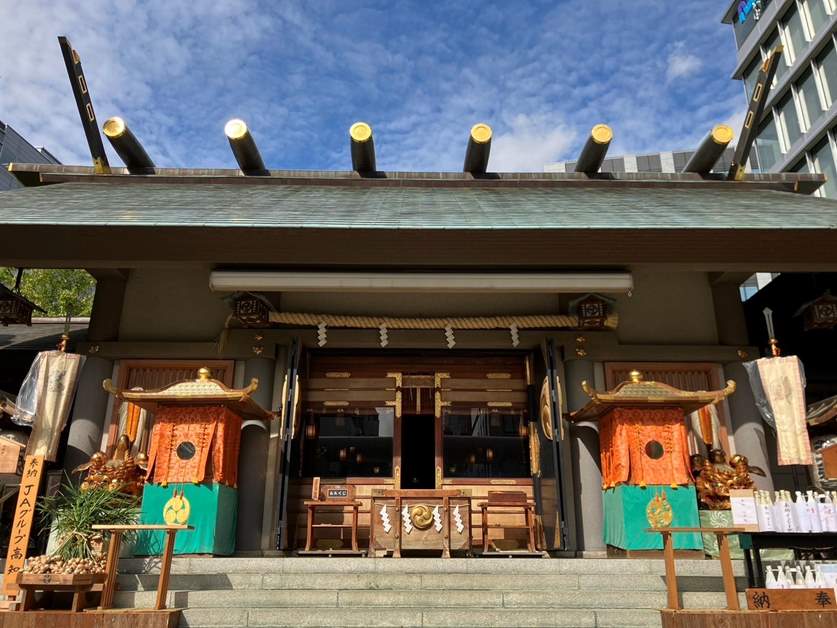
As the summer heat gradually subsides, the season for autumn festivals has arrived.
The Minato City Tourism Association has highlighted recommended autumn festivals you’ll want to visit this season.
In this first installment, we introduce the ""Daradara Matsuri,"" held over 11 days from September 11 to 21 at Shiba Daijingu Shrine, enshrined in Shiba Daimon, Minato City, Tokyo.
Long widely known as a representative autumn festival of Edo-Tokyo, it is also said to be the longest-running festival in Japan.
We spoke with Hiroyuki Katsuta, the chief priest of Shiba Daijingu Shrine, about the ""Daradara Matsuri,"" which inherits such a rich history and deep traditions.
The Minato City Tourism Association has highlighted recommended autumn festivals you’ll want to visit this season.
In this first installment, we introduce the ""Daradara Matsuri,"" held over 11 days from September 11 to 21 at Shiba Daijingu Shrine, enshrined in Shiba Daimon, Minato City, Tokyo.
Long widely known as a representative autumn festival of Edo-Tokyo, it is also said to be the longest-running festival in Japan.
We spoke with Hiroyuki Katsuta, the chief priest of Shiba Daijingu Shrine, about the ""Daradara Matsuri,"" which inherits such a rich history and deep traditions.
Relocation from "Iikura" to "Shiba" and the Pilgrimage to Ise
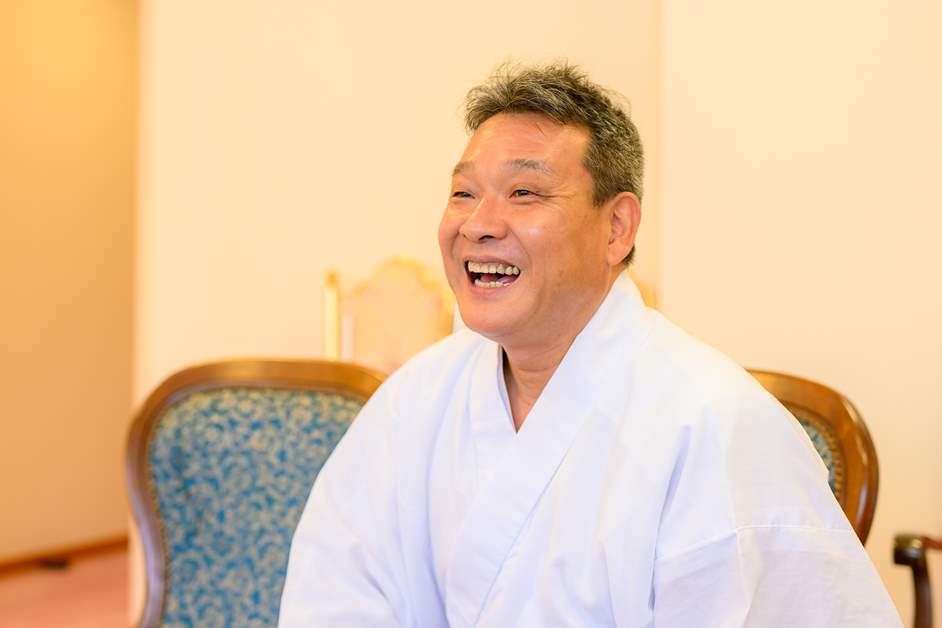
Hiroyuki Katsuta, Chief Priest of Shiba Daijingu Shrine
——Shiba Daijingu is one of the most prominent shrines in Tokyo, boasting a 1,000-year history.
Could you first tell us about the origins of Shiba Daijingu Shrine?
"First of all, just down from Tokyo Tower, there is a place named 'Iikura.' The name is written with characters meaning 'rice storehouse' because it was where rice, vegetables, and other offerings gathered from around the Kanto region to be dedicated to Ise Jingu, or O-Ise-sama.
Such a base was established about 1,000 years ago, serving a role similar to what we would call a supply stock point today.
The original foundation of our shrine, founded in 1005 AD, is said to be located there, and back then, it was called 'Iikura Shinmeigu.'"
Could you first tell us about the origins of Shiba Daijingu Shrine?
"First of all, just down from Tokyo Tower, there is a place named 'Iikura.' The name is written with characters meaning 'rice storehouse' because it was where rice, vegetables, and other offerings gathered from around the Kanto region to be dedicated to Ise Jingu, or O-Ise-sama.
Such a base was established about 1,000 years ago, serving a role similar to what we would call a supply stock point today.
The original foundation of our shrine, founded in 1005 AD, is said to be located there, and back then, it was called 'Iikura Shinmeigu.'"
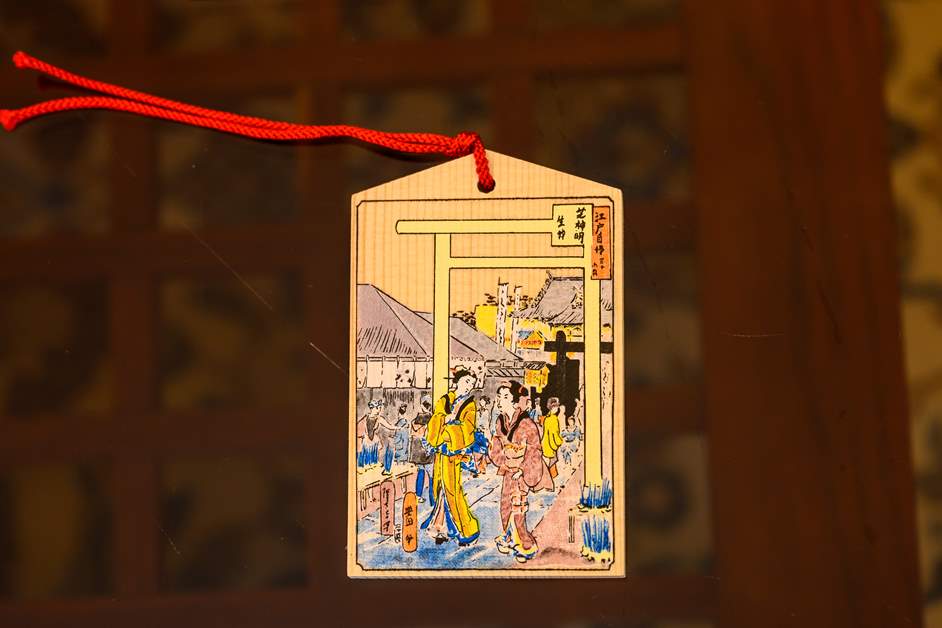
"Shiba Shinmei: Immensely Popular Among Edoites "
——Why was it relocated from there to its current location in Shiba?
"When the Edo period began and the Tokugawa Shogunate was established, Zojoji Temple moved from Kioicho in Chiyoda City to what is now Shiba Park.
The Tokugawa Shogunate paid meticulous attention to auspicious directions, and since the location of Iikura Shinmeigu at the time was in an unlucky direction relative to Zojoji, the Shogunate provided the current land for the shrine to be relocated.
This relocation took place in the early Edo period, after which it came to be called 'Shiba Shinmei.' That era was perhaps its most prosperous period."
——We heard that the popularity of pilgrimages to Ise Jingu during the Edo period—so-called 'Ise Mairi'—was a major key to this.
"Yes, exactly. At that time, people living in the Chukyo or Kinai regions could easily visit Ise Jingu, but for those living north of the Kanto region, it required immense time and money.
A round trip from Edo took about a month and a half, and traveling in a group of two or three is said to have cost the equivalent of around 2 million yen today.
Therefore, it was not a place just anyone could easily go.
Since Shiba Shinmei in Edo enshrined the spirit of Ise Jingu, more and more people came to worship at Shiba Shinmei as a substitute for traveling all the way to Ise, which led to its great prosperity back then.
By the way, its current name, 'Shiba Daijingu,' was adopted in the Meiji period."
"When the Edo period began and the Tokugawa Shogunate was established, Zojoji Temple moved from Kioicho in Chiyoda City to what is now Shiba Park.
The Tokugawa Shogunate paid meticulous attention to auspicious directions, and since the location of Iikura Shinmeigu at the time was in an unlucky direction relative to Zojoji, the Shogunate provided the current land for the shrine to be relocated.
This relocation took place in the early Edo period, after which it came to be called 'Shiba Shinmei.' That era was perhaps its most prosperous period."
——We heard that the popularity of pilgrimages to Ise Jingu during the Edo period—so-called 'Ise Mairi'—was a major key to this.
"Yes, exactly. At that time, people living in the Chukyo or Kinai regions could easily visit Ise Jingu, but for those living north of the Kanto region, it required immense time and money.
A round trip from Edo took about a month and a half, and traveling in a group of two or three is said to have cost the equivalent of around 2 million yen today.
Therefore, it was not a place just anyone could easily go.
Since Shiba Shinmei in Edo enshrined the spirit of Ise Jingu, more and more people came to worship at Shiba Shinmei as a substitute for traveling all the way to Ise, which led to its great prosperity back then.
By the way, its current name, 'Shiba Daijingu,' was adopted in the Meiji period."
Origin of the Festival and Lucky Charms: "Ginger" and "Chigibako"
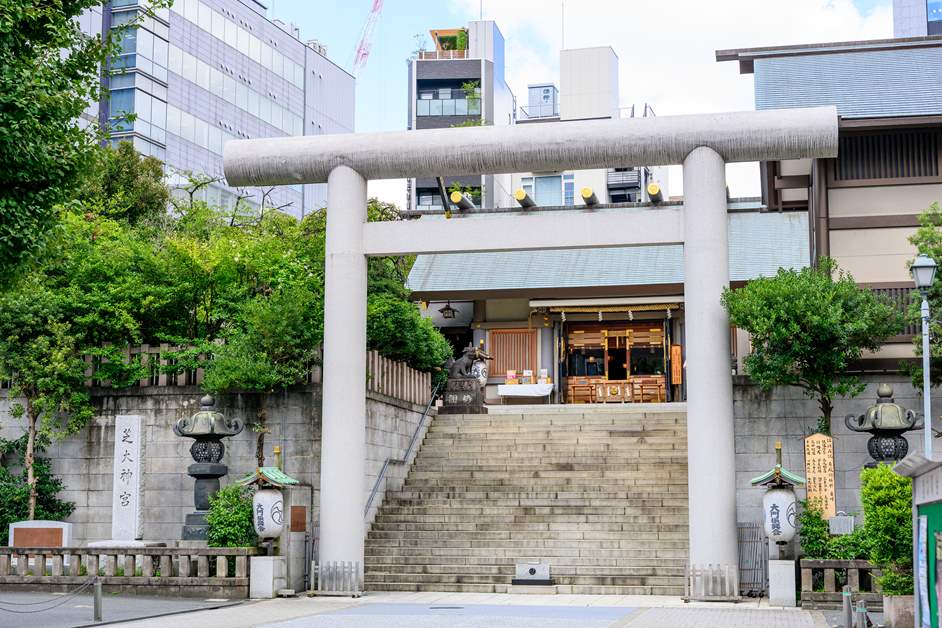
High Numbers of Worshipers Since the Edo Period
——We heard that the reason the "Daradara Matsuri" came to be held over a long 11-day period was also due to the increase in worshipers during the Edo period.
"Originally, the annual festival of Shiba Daijingu was held on September 16.
However, because so many worshipers flooded in, the chief priest at the time—who was my ancestor—extended it by five days before and five days after, making it an 11-day festival in total.
In addition to the festival's long duration, September is traditionally a month with a lot of rain, making it feel damp and lingering (daradara), which led to the popular nickname 'Daradara Matsuri.'
However, Edoites had a stylish sense of sophistication, so they cleverly used kanji characters meaning 'thick/great' (太) and 'good' (良) to write it as 'TARA-TARA Matsuri' (太良太良まつり).
Because it carries the auspicious meaning that 'good fortune will continue thick and long,' many people choose to hold their wedding ceremonies during this period."
"Originally, the annual festival of Shiba Daijingu was held on September 16.
However, because so many worshipers flooded in, the chief priest at the time—who was my ancestor—extended it by five days before and five days after, making it an 11-day festival in total.
In addition to the festival's long duration, September is traditionally a month with a lot of rain, making it feel damp and lingering (daradara), which led to the popular nickname 'Daradara Matsuri.'
However, Edoites had a stylish sense of sophistication, so they cleverly used kanji characters meaning 'thick/great' (太) and 'good' (良) to write it as 'TARA-TARA Matsuri' (太良太良まつり).
Because it carries the auspicious meaning that 'good fortune will continue thick and long,' many people choose to hold their wedding ceremonies during this period."
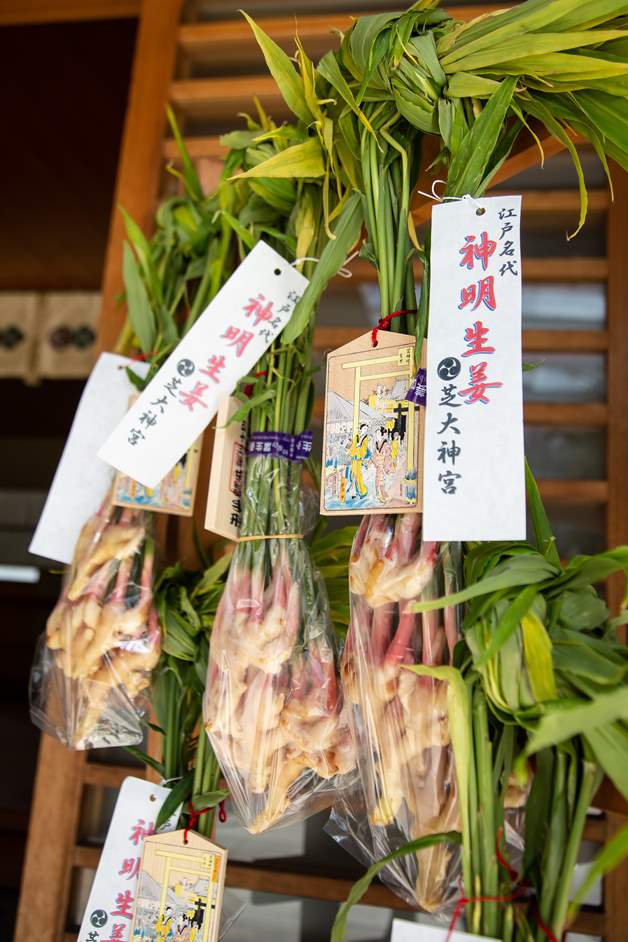
"Ginger: Valued Since Ancient Times for Medicinal Uses and Antidotal Properties "
——Speaking of lucky charms, "Gozen Shoga" (offering ginger) is also famous.
The "Daradara Matsuri" is also called the "Ginger Festival" because ginger was offered to the deities and sold vigorously within the shrine grounds and along the approach.
Could you tell us about the connection between Shiba Daijingu Shrine and ginger?
"Over a thousand years ago, plenty of Yanaka ginger grew naturally around the area where Tokyo Tower stands today.
When that ginger was packed alongside shipment parcels sent to Ise Jingu, the rice and vegetables spoiled much less.
From this, ginger came to be associated with warding off illness and bad fortune, connecting people to the deities, and thus was bestowed as a lucky charm praying for longevity.
By the way, it is said that Tokyo Tower was built on that spot because the founder, Hisakichi Maeda, wished to broadcast clean radio waves from a sacred, clean land where ginger grew."
The "Daradara Matsuri" is also called the "Ginger Festival" because ginger was offered to the deities and sold vigorously within the shrine grounds and along the approach.
Could you tell us about the connection between Shiba Daijingu Shrine and ginger?
"Over a thousand years ago, plenty of Yanaka ginger grew naturally around the area where Tokyo Tower stands today.
When that ginger was packed alongside shipment parcels sent to Ise Jingu, the rice and vegetables spoiled much less.
From this, ginger came to be associated with warding off illness and bad fortune, connecting people to the deities, and thus was bestowed as a lucky charm praying for longevity.
By the way, it is said that Tokyo Tower was built on that spot because the founder, Hisakichi Maeda, wished to broadcast clean radio waves from a sacred, clean land where ginger grew."
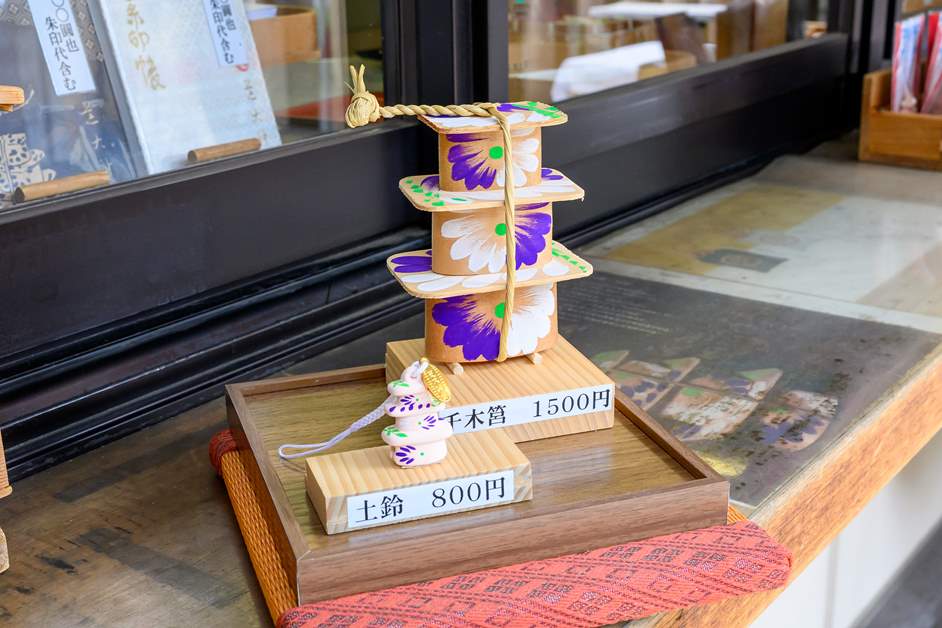
"""Chigibako"" Amulets (Earthenware Bells) Are Also Unique to Shiba Daijingu "
——Please tell us about another lucky charm, the "Chigibako."
"A Chigibako is a set of three small stacked boxes, highly popular mainly as a lucky charm for women.
Its name plays on the 'chigi' (roof finials) found on shrine roofs, but 'ki' (wood) is also homophonous with 'ki' (wearing clothes).
Thus, it carries the nuance of 'a thousand garments' (sen no kimono), symbolizing accumulating many outfits, marrying into a good family, making a prosperous marriage, and bringing good luck in relationships.
Furthermore, soybeans are kept inside the boxes, making a rattle sound when shaken.
Just as soybeans are used in Setsubun rituals to drive away evil spirits, this also carries the prayer to keep unwanted men away."
"A Chigibako is a set of three small stacked boxes, highly popular mainly as a lucky charm for women.
Its name plays on the 'chigi' (roof finials) found on shrine roofs, but 'ki' (wood) is also homophonous with 'ki' (wearing clothes).
Thus, it carries the nuance of 'a thousand garments' (sen no kimono), symbolizing accumulating many outfits, marrying into a good family, making a prosperous marriage, and bringing good luck in relationships.
Furthermore, soybeans are kept inside the boxes, making a rattle sound when shaken.
Just as soybeans are used in Setsubun rituals to drive away evil spirits, this also carries the prayer to keep unwanted men away."
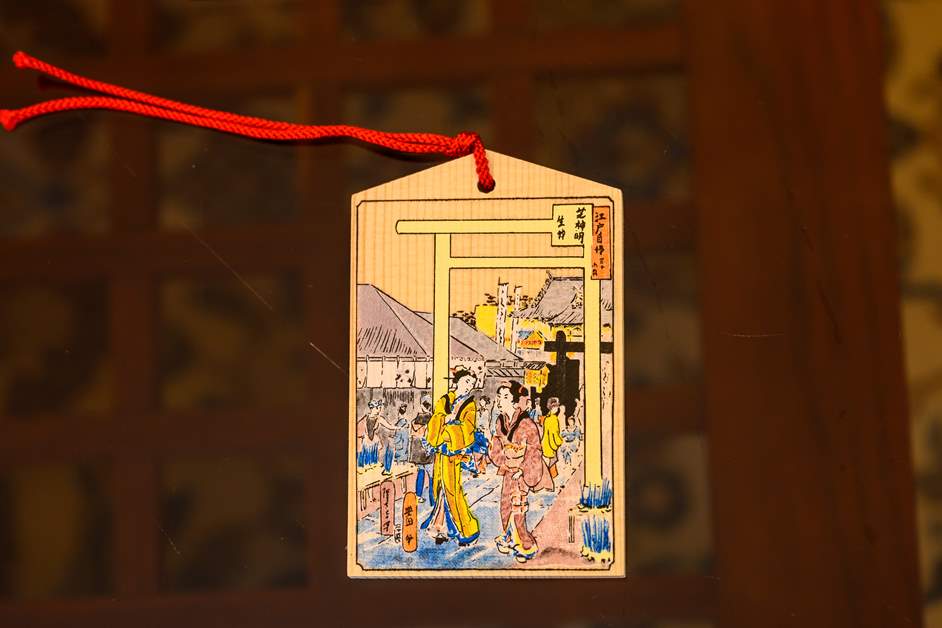
"For Edoites, Ginger and Chigibako Were Items Signaling the Arrival of September "
——The wordplay is remarkably clever and stylish.
We heard that Kabuki actors also held "Chigibako."
"Accumulating many costumes means becoming a popular and successful actor.
Prominent figures like the previous Kanzaburo Nakamura owned many of them, hoping their troupe's artistry would refine and their costumes would increase.
During the 'Daradara Matsuri,' many people come specifically to purchase Gozen Shoga and Chigibako."
We heard that Kabuki actors also held "Chigibako."
"Accumulating many costumes means becoming a popular and successful actor.
Prominent figures like the previous Kanzaburo Nakamura owned many of them, hoping their troupe's artistry would refine and their costumes would increase.
During the 'Daradara Matsuri,' many people come specifically to purchase Gozen Shoga and Chigibako."
A Festival Evolving with the Times
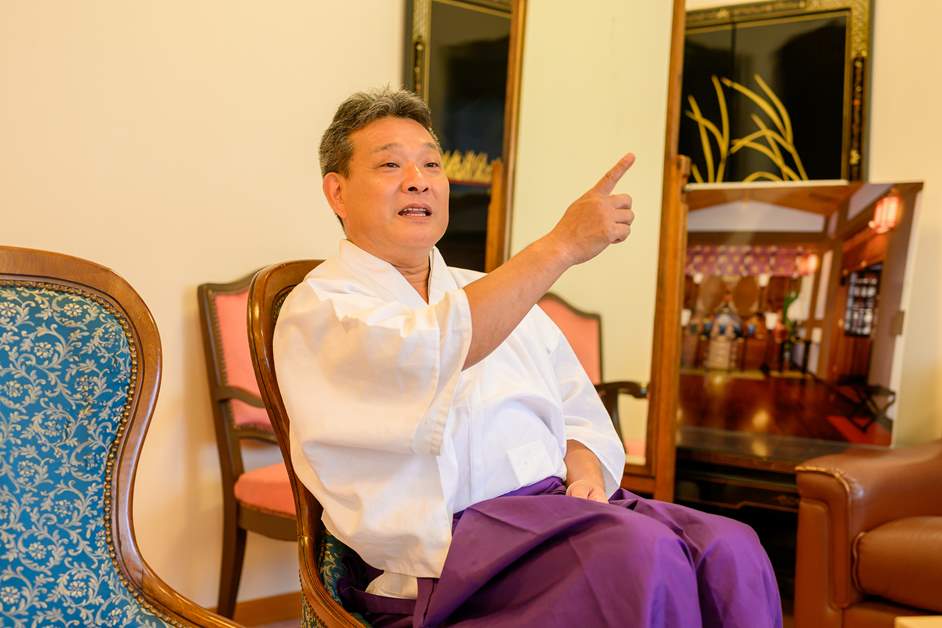
Mr. Katsuta, the 60th Chief Priest
——It is clear that this festival has been loved for generations.
Is that uniquely attributable to the land of Shiba itself?
"At the root of Shiba lie tradition and culture.
In our shrine, a local legend says the name 'Shiba' was originally written with characters for 'wave of ambition/will' (志波 - Shiba).
During the Edo period, ambitious craftsmen gathered here from all over Japan, building a foundation of deep tradition and culture.
Today, Shiba has become a place where ambitions surge like waves not only from Japan, but from all over the world.
With the new World Trade Center Building scheduled to open next year, I believe Shiba is entering an era of further development while honoring its rich traditions and culture."
Is that uniquely attributable to the land of Shiba itself?
"At the root of Shiba lie tradition and culture.
In our shrine, a local legend says the name 'Shiba' was originally written with characters for 'wave of ambition/will' (志波 - Shiba).
During the Edo period, ambitious craftsmen gathered here from all over Japan, building a foundation of deep tradition and culture.
Today, Shiba has become a place where ambitions surge like waves not only from Japan, but from all over the world.
With the new World Trade Center Building scheduled to open next year, I believe Shiba is entering an era of further development while honoring its rich traditions and culture."
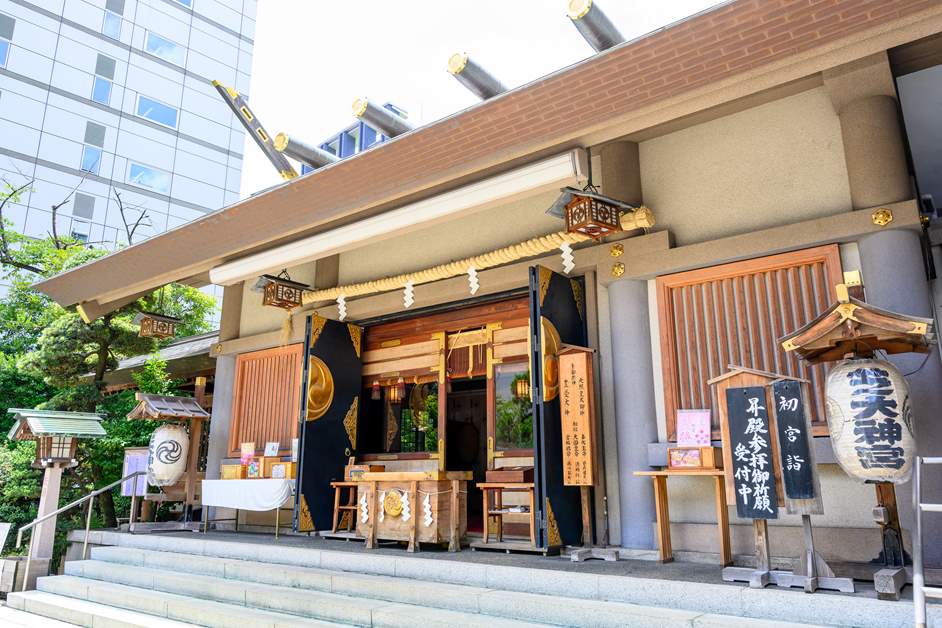
"Shiba Daijingu Protected by ""Unchanging"" and ""Universal"" Values "
——In light of that, could you share the values you hold dear in continuing to protect the "Daradara Matsuri"?
"I believe the key concepts are 'unchanging' (fuhen) and 'universal' (fuhen).
'Unchanging' refers to core beliefs and principles that must never change, while 'universal' refers to flexibly adopting elements in response to changing times.
For instance, the 11-day duration of the festival remains unchanging, but to adapt to modern times, while daily rituals inside the shrine take place every day as always, neighborhood mikoshi (portable shrine) processions are now held mainly on weekends and holidays.
Furthermore, whereas only residents of the neighborhood used to carry the mikoshi, local business professionals now lend their support as corporate sponsor associations.
Since they spend more than half their week working here, they are essentially local residents of Shiba.
By adapting to the times in this way, we are able to continue preserving traditions like the mikoshi."
——So you accept changing times in order to protect what remains unchanging.
"That's correct.And speaking of mikoshi, sweet sake (amazake) is also famous.
Since the Edo period, people wished to avoid rain during festivals because rain would prevent mikoshi processions.
This led to a clever wordplay where 'rain shelter' (ama-sake) shifted into 'sweet sake' (amazake)."
"I believe the key concepts are 'unchanging' (fuhen) and 'universal' (fuhen).
'Unchanging' refers to core beliefs and principles that must never change, while 'universal' refers to flexibly adopting elements in response to changing times.
For instance, the 11-day duration of the festival remains unchanging, but to adapt to modern times, while daily rituals inside the shrine take place every day as always, neighborhood mikoshi (portable shrine) processions are now held mainly on weekends and holidays.
Furthermore, whereas only residents of the neighborhood used to carry the mikoshi, local business professionals now lend their support as corporate sponsor associations.
Since they spend more than half their week working here, they are essentially local residents of Shiba.
By adapting to the times in this way, we are able to continue preserving traditions like the mikoshi."
——So you accept changing times in order to protect what remains unchanging.
"That's correct.And speaking of mikoshi, sweet sake (amazake) is also famous.
Since the Edo period, people wished to avoid rain during festivals because rain would prevent mikoshi processions.
This led to a clever wordplay where 'rain shelter' (ama-sake) shifted into 'sweet sake' (amazake)."
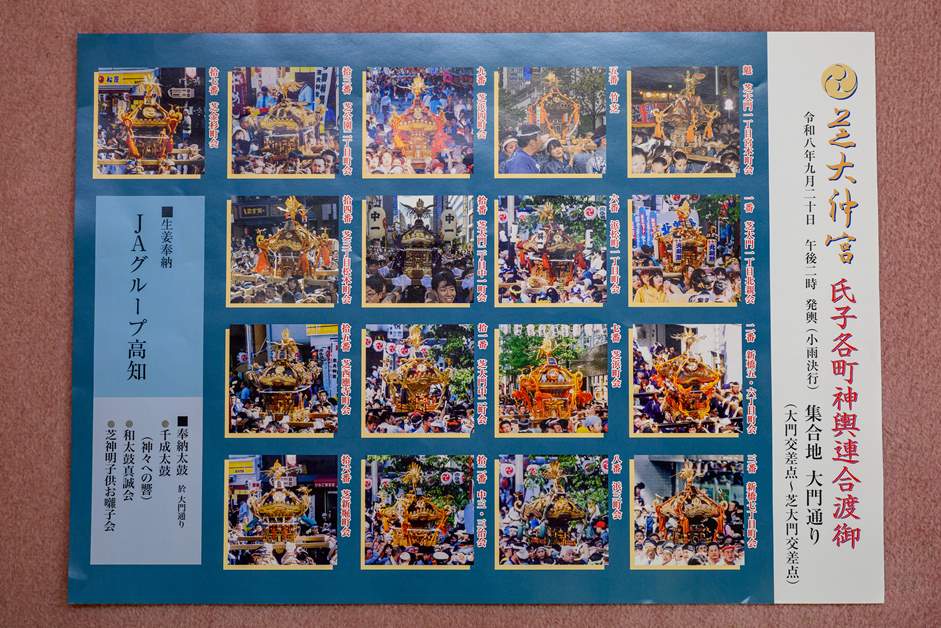
Joint Mikoshi Procession of 17 Neighborhood Associations
——The stylish sensibility of Edoites is woven into so many aspects.
Lastly, do you have a message for visitors coming to the "Daradara Matsuri"?
"I hope each visitor can feel the 'wave of ambition' gathering in this land through their own personal perspective.
On September 20 at 2:00 PM, the Joint Mikoshi Procession of Parish Neighborhoods will begin along Daimon Street, so I truly hope everyone comes to feel that vibrant energy firsthand."
Lastly, do you have a message for visitors coming to the "Daradara Matsuri"?
"I hope each visitor can feel the 'wave of ambition' gathering in this land through their own personal perspective.
On September 20 at 2:00 PM, the Joint Mikoshi Procession of Parish Neighborhoods will begin along Daimon Street, so I truly hope everyone comes to feel that vibrant energy firsthand."
[Shiba Daijingu Shrine - Daradara Matsuri]
Festival Period: Friday, September 11 – Monday, September 21, 2026
September 16 (Wed) Annual Grand Festival: 11:00 AM
September 20 (Sun) Respect for the Aged Festival: 10:00 AM
September 20 (Sun) Joint Mikoshi Procession: 2:00 PM
https://www.shibadaijingu.com/matsuri/
Festival Period: Friday, September 11 – Monday, September 21, 2026
September 16 (Wed) Annual Grand Festival: 11:00 AM
September 20 (Sun) Respect for the Aged Festival: 10:00 AM
September 20 (Sun) Joint Mikoshi Procession: 2:00 PM
https://www.shibadaijingu.com/matsuri/